


Part 1: Structure and liberation
Every silhouette begins with a pattern
Picture two dresses side by side. The first, from Christian Dior’s debut collection of 1947, pulls the waist into a narrow band, rounds the hips into a deliberate curve and releases a skirt so full that it sways with every step. The second is a cocoon dress: a soft, rounded volume that swells away from the body through the middle and gathers itself back in toward the hem, so that the waist, the hip and the bust all but disappear from view. Few garments could look less alike, and yet both are answers to the same question, asked by every designer who has ever picked up a pencil: what shape should the body make?
That shape is the silhouette, the overall outline a garment creates when it is worn. It takes in proportion, volume and balance, and the relationship between the fabric and the body beneath it. It is also the first thing the eye reads in a collection, long before color, texture or detail can register. Across a crowded room or down the length of a runway, the outline arrives first.
We recognize a silhouette visually, but its form is never simply drawn. It is engineered through a long chain of decisions: where the waist seam sits, how many darts are taken and where, which way the grain runs, how much ease is allowed, whether volume is added through gores, pleats and padding or taken away through seams and suppression, and whether the garment needs an internal structure to hold its shape at all. Seen this way, the history of the dress silhouette is also a history of pattern-making ingenuity.
This article follows that history through the eyes of a pattern maker. For each era it asks three questions: what the silhouette looked like, how it was built, and why it changed. The answers reveal a story far richer than a simple march from restriction to freedom, and they lead naturally to the way silhouettes are developed today.
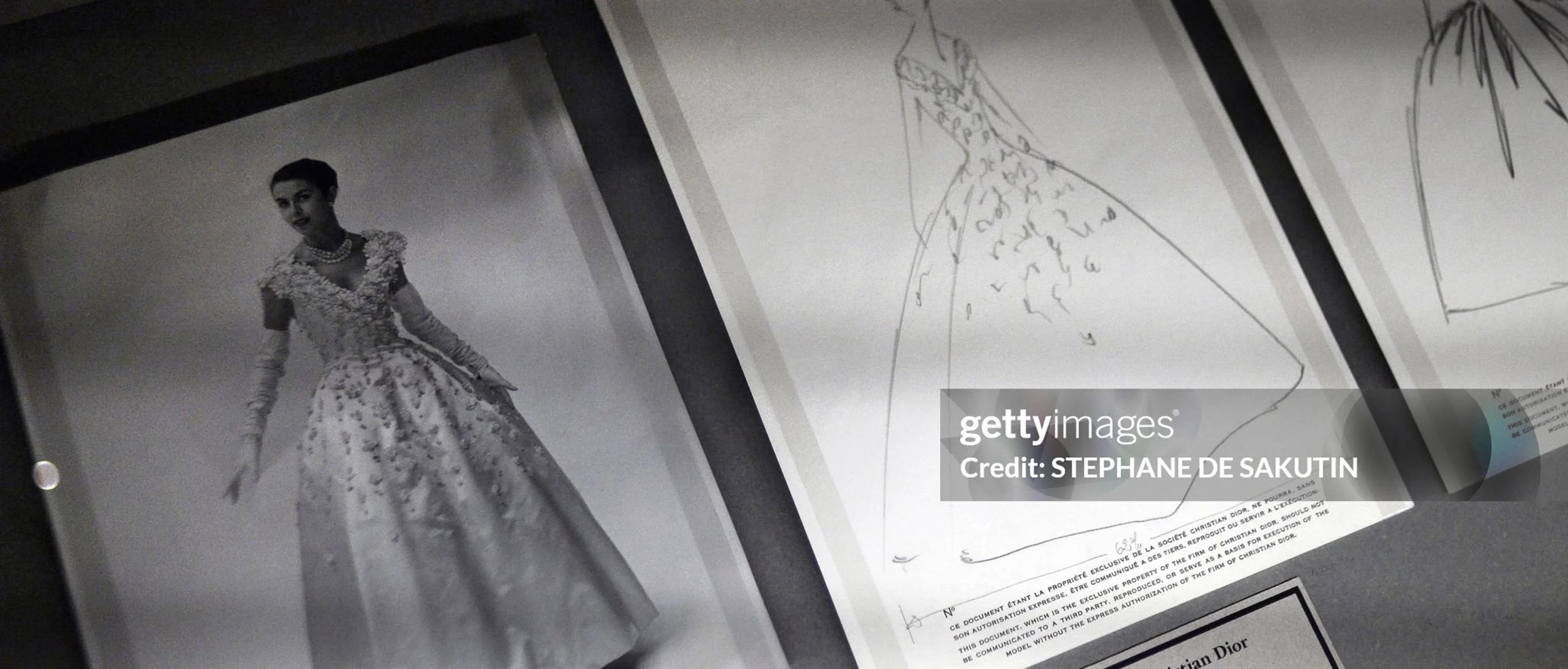
STEPHANE DE SAKUTIN/AFP via Getty Images
Before the 20th century: when structure shaped the body
Building a silhouette from the inside out is far older than the period this article begins with. As early as the late fifteenth century, the Spanish farthingale held skirts out in a stiff cone over hoops of cane and, later, whalebone (Montalvo, 2018), and by the mid-eighteenth century conical stays narrowed the waist while panniers spread skirts to what The Met describes as “sometimes outrageous widths” (Glasscock, 2004a). For most of the nineteenth century, the fashionable silhouette was not cut to fit the body so much as built around it. Garments sat on top of an architecture of stays, corsets, hoops and pads, and the dress pattern worked in partnership with that hidden scaffolding.
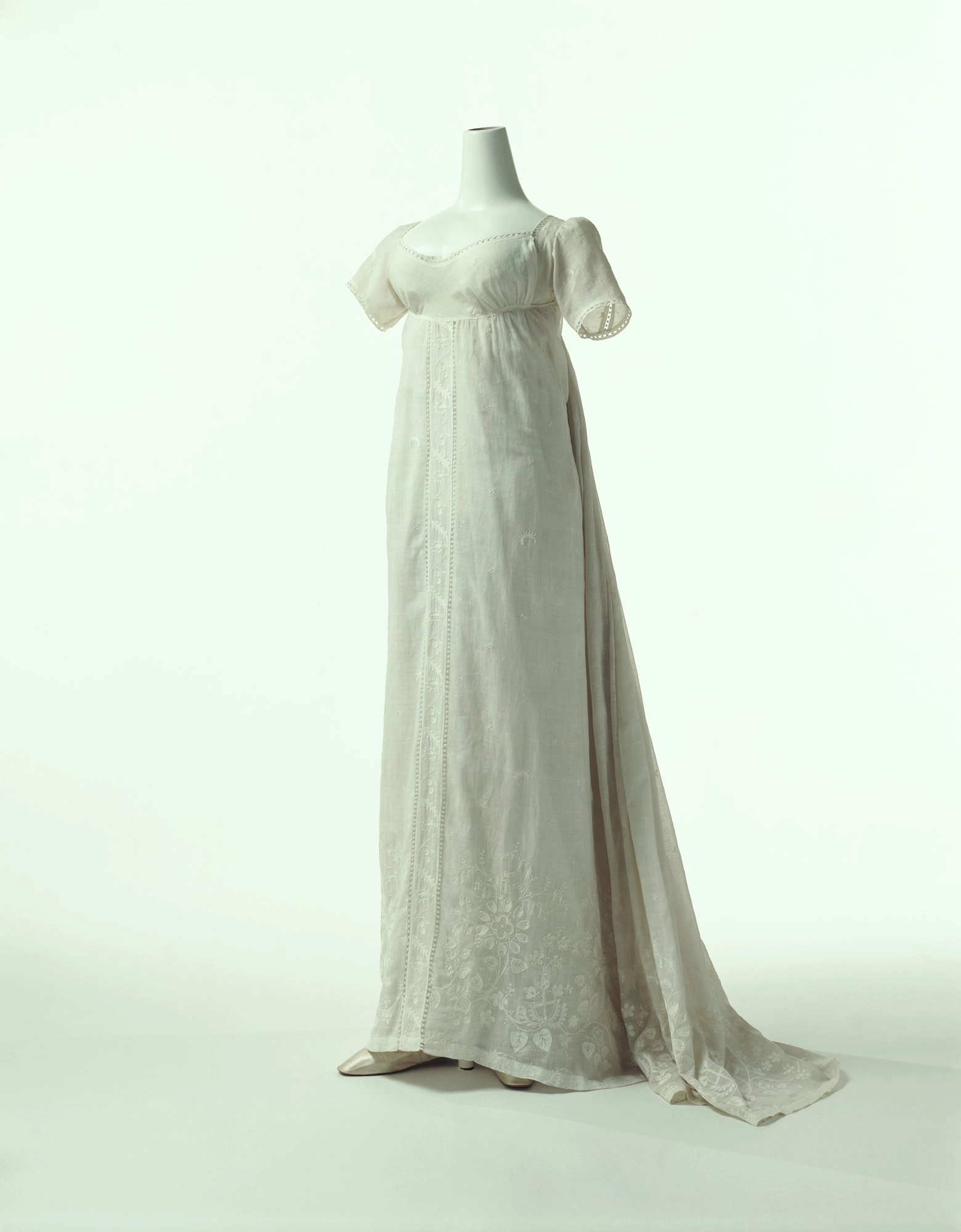
The Empire line (late 1790s to 1810s)
Neoclassical dress raised the waistline to sit just beneath the bust, letting a long, narrow skirt fall from that high seam in imitation of classical statuary. The earliest examples were made in sheer cottons and linens, with fullness gathered into a short bodice. As the 1810s progressed, heavier silks returned and the silhouette grew more structured, supported by long stays that compressed the hips and used gussets beneath the breasts to lift them (Glasscock, 2004b). Even this famously light and simple line, in other words, depended on what lay underneath.
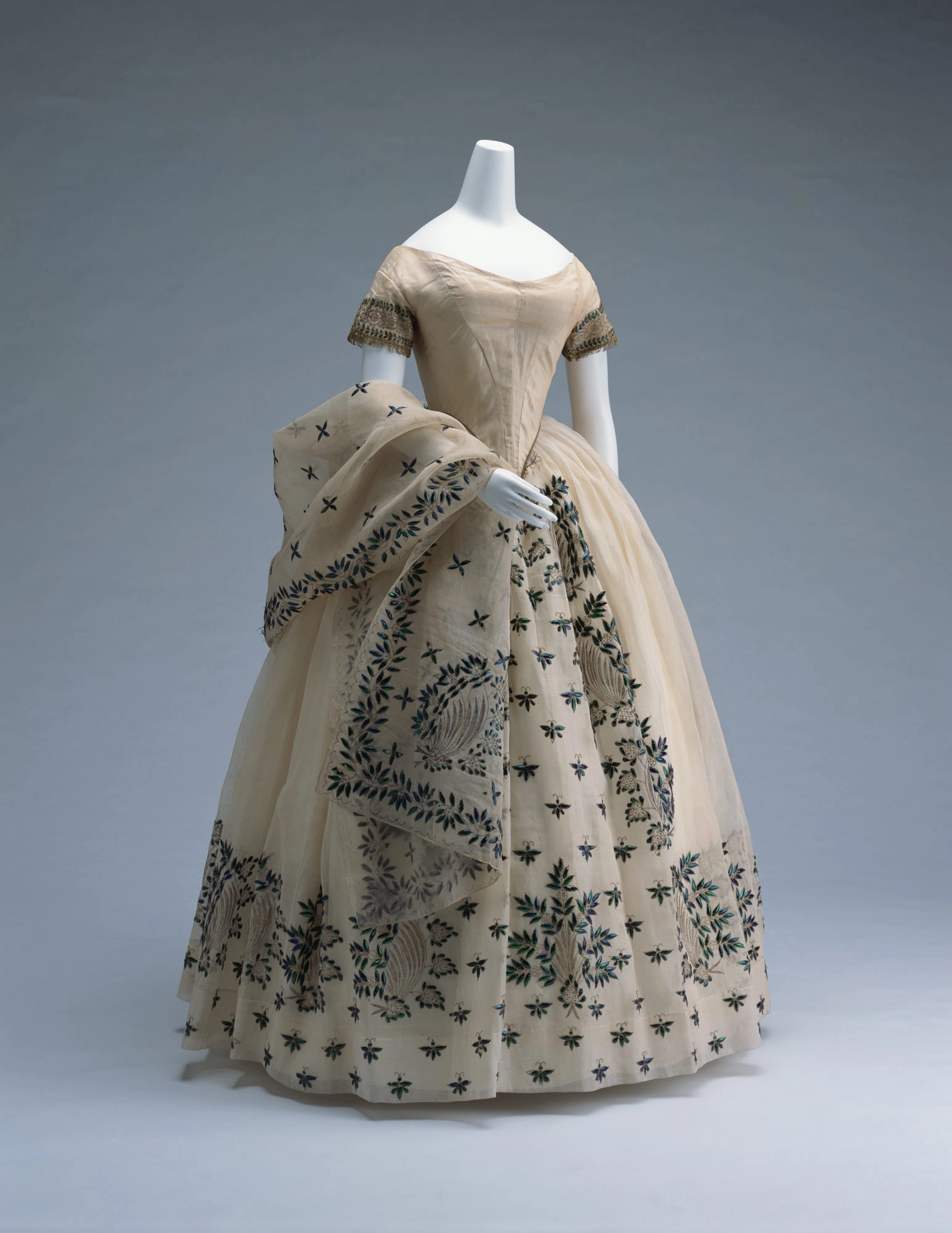
The crinoline (mid-19th century)
Between the late 1810s and the 1840s the waist descended to its natural position and skirts swelled into a bell, propped up by layer upon layer of corded or stiffened petticoats. The cage crinoline, introduced around 1856, replaced that weight with a light frame of hoops made from whalebone, cane or steel (Glasscock, 2004). Freed from the burden of petticoats, skirts could expand sideways to a breadth that would have been impossible before. For the dressmaker, the challenge shifted from building volume to distributing great quantities of fabric smoothly over a rigid, predetermined form.
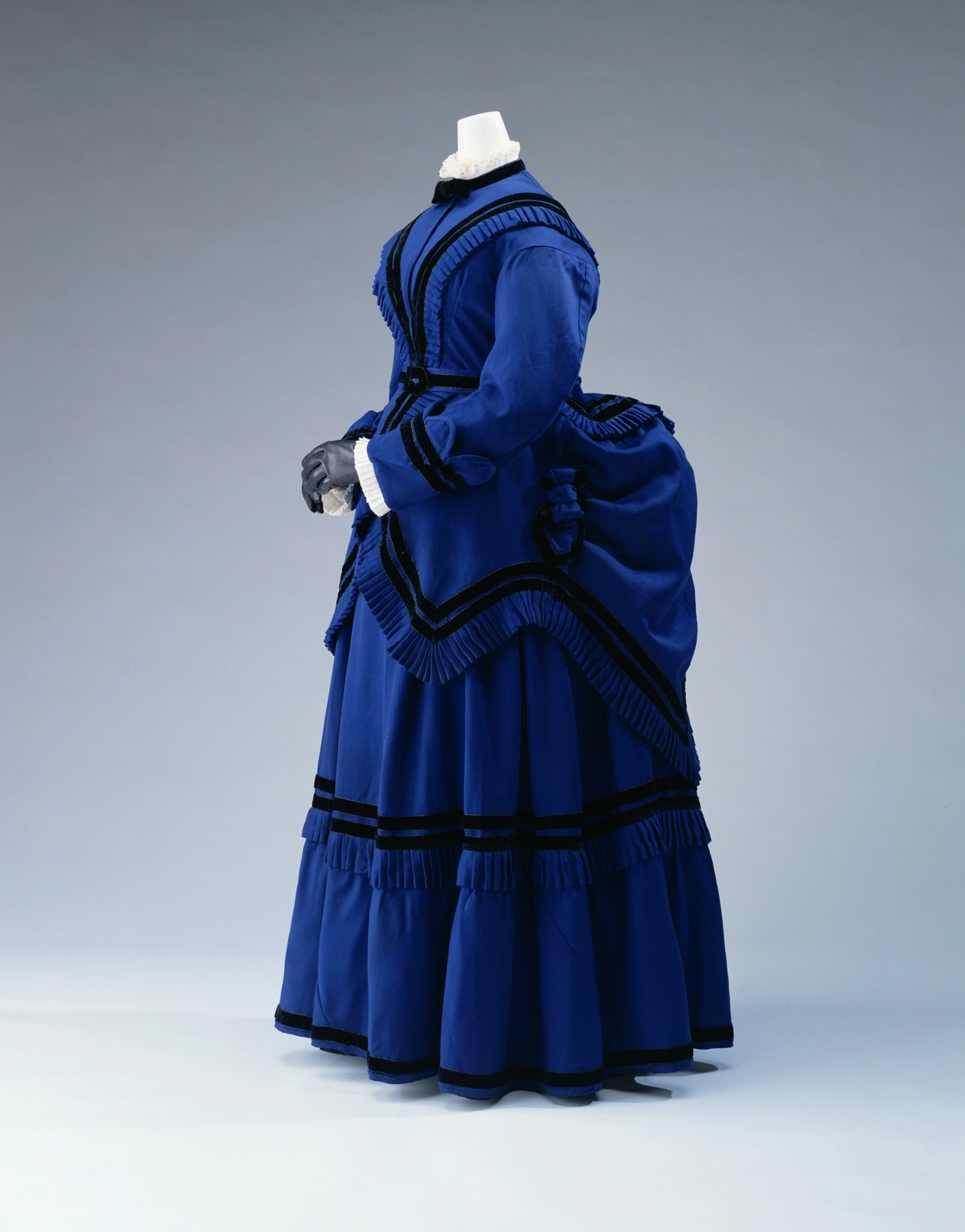
The bustle (1870s and 1880s)
In the 1870s the wide base of the crinoline fell out of favor and fullness migrated to the back, where it was pulled up and draped over pads and frames. The bustle subsided for a few years at the end of the decade, then returned in the early 1880s in its most dramatic form, projecting almost at a right angle from the small of the back. Meanwhile the corset, now reinforced with steel boning and pieced from increasingly complex shapes, sculpted the front of the torso into a firm hourglass (Glasscock, 2004b).
The straight-front corset and the “S-bend” (c. 1896 to 1900s)
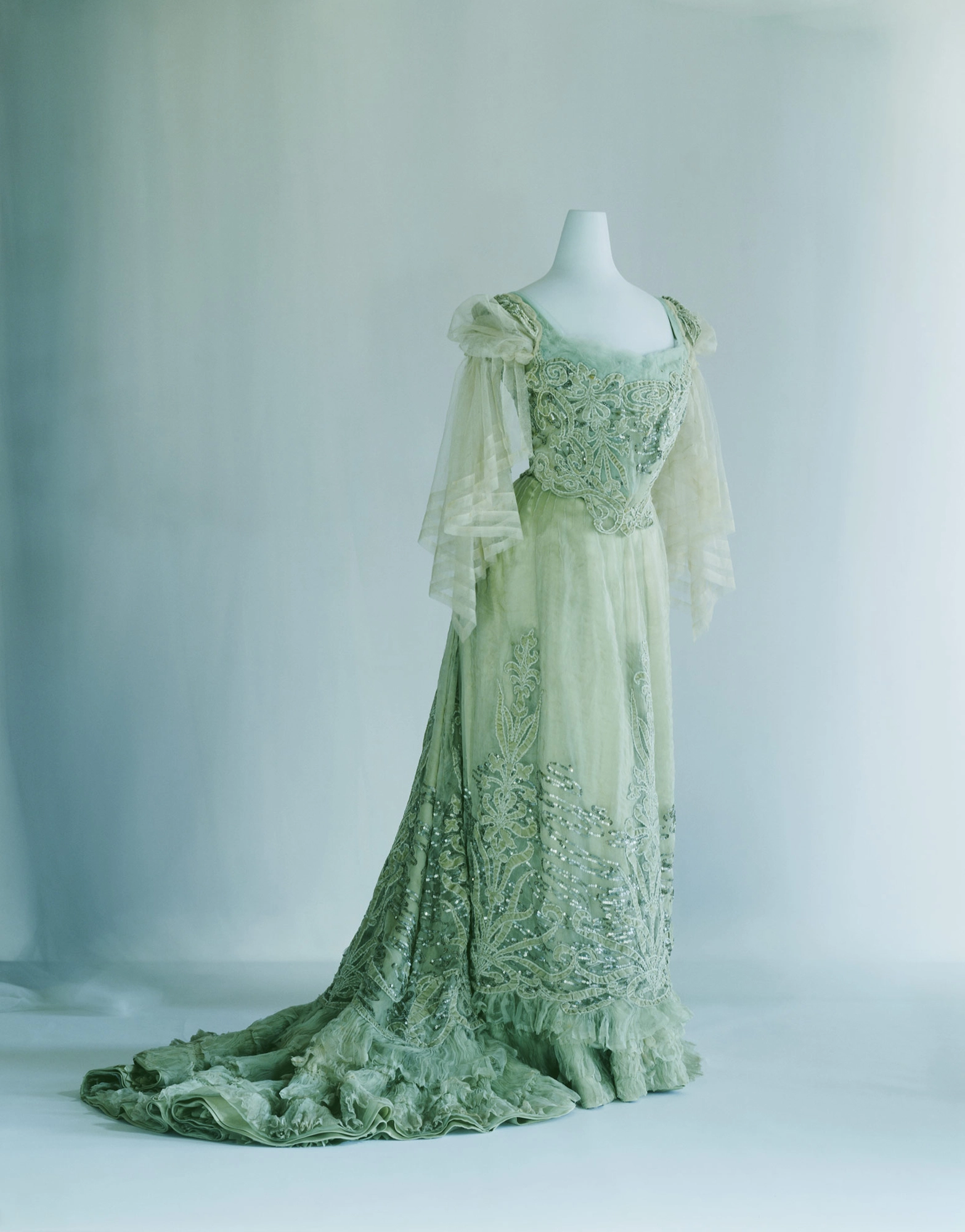
At the turn of the century the fashionable figure tipped forward: a low, full bust above, an arched back and hips thrust behind. Today we call this the S-bend, though the term is a later invention; in its own time the style was known as the “straight front” or the “sudden hip.” It grew from a corset developed in the 1890s by the French physician Inès Gâches-Sarraute, who designed it to support and raise the abdomen rather than compress it. Its shape came directly from its cut: curved panels cut on the bias followed the waist and let the hips swell outward. By 1900 it was the prevailing look, although it proved no healthier than the corsets it replaced (Libes, 2023).
The lesson of these centuries is that a fashionable silhouette was often a feat of engineering performed around the body rather than a matter of cutting cloth to fit it. The cut of the dress was only half of the design; the other half was invisible.
The 1910s to 1930s: fashion begins to move with the body
The early twentieth century loosened the grip of that scaffolding, but it would be a mistake to imagine that construction became simpler. What changed was where the skill was hidden.
The 1910s: Paul Poiret and a new relationship with the waist
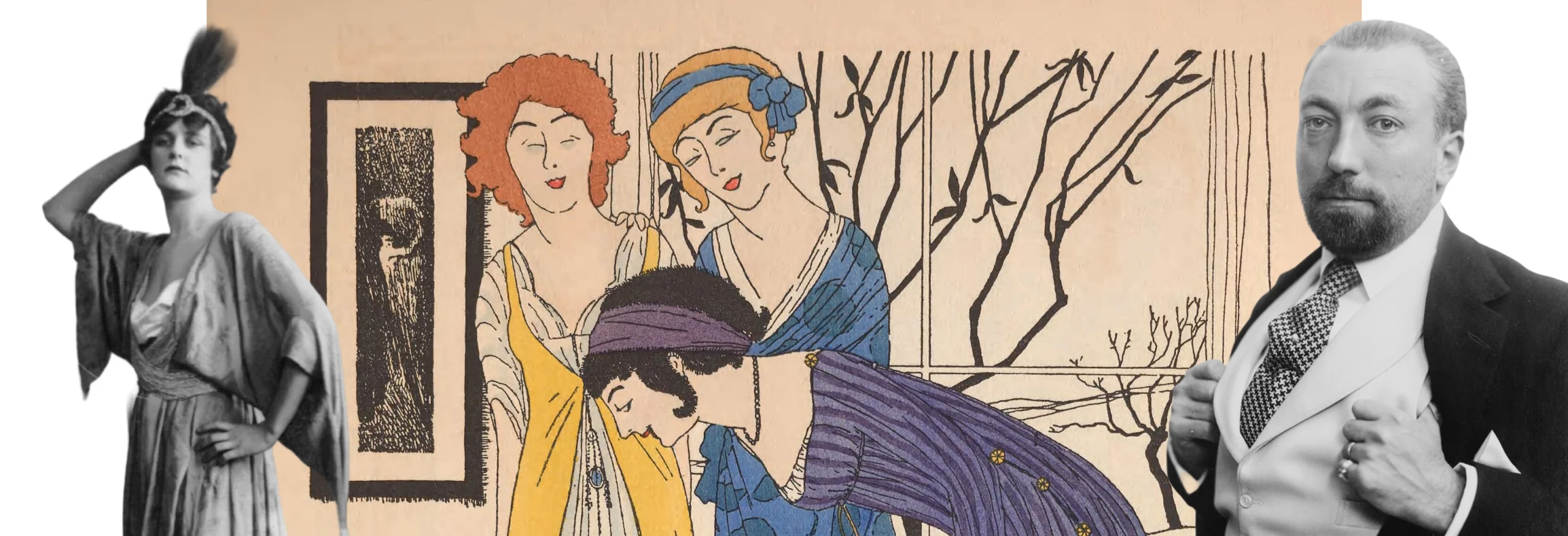
Paul Poiret claimed to have freed women first from the petticoat, in 1903, and then from the corset, in 1906. His straight, high-waisted columns and draped tunics certainly helped to dissolve the corseted waist that had persisted, almost without interruption, since the Renaissance.
Yet Poiret was not working alone. The Metropolitan Museum of Art notes that designers such as Lucile and Madeleine Vionnet were also advancing an uncorseted silhouette, and that Poiret’s name became most closely attached to the change largely through his gift for publicity (Koda & Bolton, 2008).
What Poiret’s work does show, with unusual clarity, is a shift in method. He favored garments cut along straight lines and constructed from rectangles, drawing on the Greek chiton, the Japanese kimono and the North African and Middle Eastern caftan. His clothes hung from the shoulders rather than gripping the waist. In practical terms, this moved the emphasis of dressmaking away from the precise, fitted pattern pieces of tailoring and toward the skills of draping (Koda & Bolton, 2008).
The 1920s: the tubular silhouette
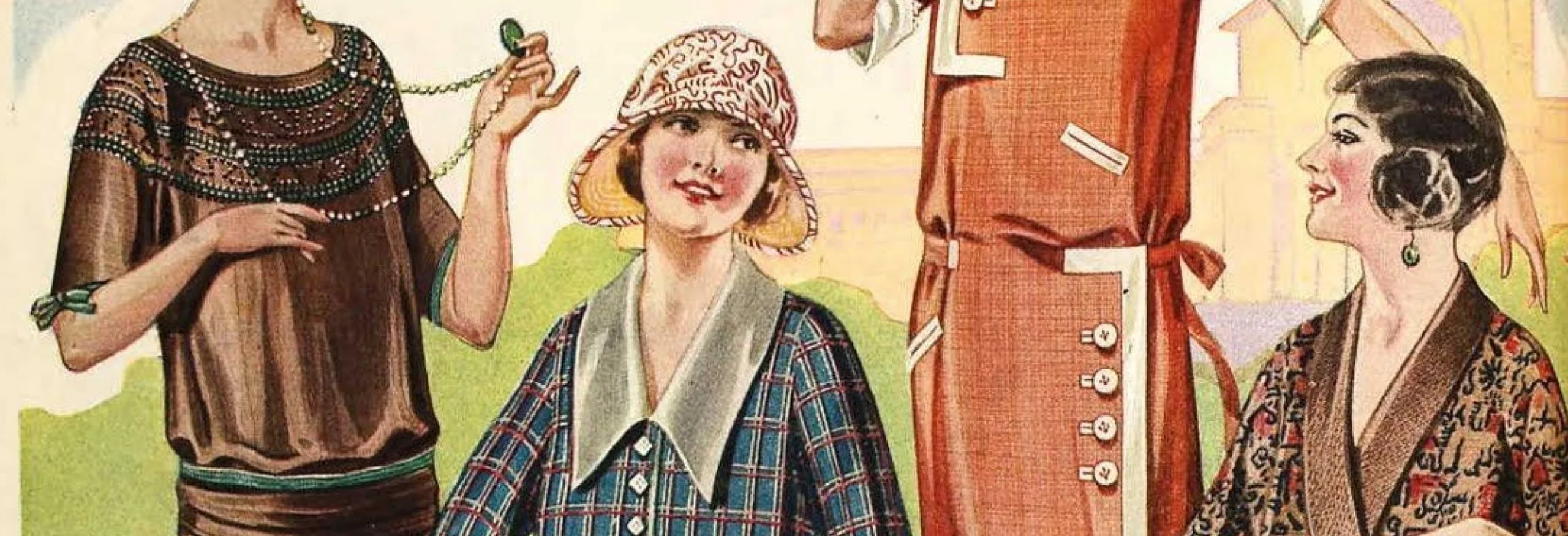
By the 1920s the waist had slipped down to the hips, and the dress became a long, straight tube that skimmed past the bust, waist and hips without dwelling on any of them. Hemlines rose toward the knee as the decade went on. From a pattern maker’s perspective, the tubular dress is built from largely rectangular shapes, with straight side seams, a low hip seam or sash where a waist seam would once have been, and carefully judged ease so that the garment falls cleanly rather than clinging. Volume, when it appeared, tended to be placed low, through godets, pleats or tiers below the dropped waist, so that the dress could move when its wearer danced.
The 1930s: Madeleine Vionnet and the bias cut
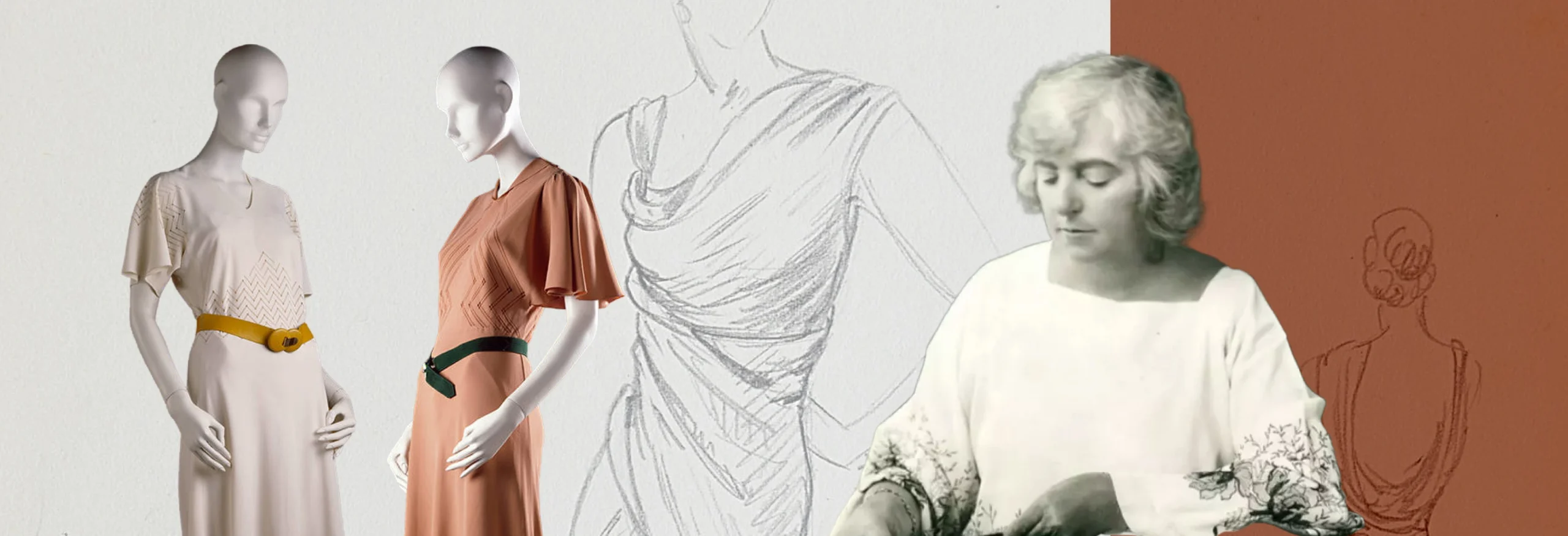
If the 1920s straightened the silhouette, the 1930s let it pour. The long, fluid column of the decade owes much to Madeleine Vionnet, who opened her own house in Paris in 1912 and became celebrated, especially in the late 1920s and 1930s, for cutting whole dresses on the bias, at a 45-degree angle to the weave. Some credit her with inventing the bias cut, but the technique was already used for smaller elements such as collars; Vionnet’s contribution was to apply it to entire garments with extraordinary sophistication (Franceschini, 2021).
Cut on the bias, a woven fabric gains a degree of stretch and a liquid drape that it lacks on the straight grain. Vionnet exploited this so that her dresses could cling to the body’s natural curves without any understructure at all (Franceschini, 2021). She worked out her ideas by draping on a small wooden mannequin (The Museum at FIT, n.d.), which the Vionnet scholar Betty Kirke describes as a half-scale form, and her patterns relied on geometry, such as a triangle inserted beneath the arm or a main piece cut as a quarter-circle, that looks nothing like the body until it is draped upon it (Champ, 2009).
The result appeared effortless. The engineering required to achieve it was formidable: bias panels stretch and drop under their own weight, so every seam, every hem and every join had to anticipate how the fabric would behave once it hung.
As fashion moved toward softer silhouettes, pattern making grew more sophisticated, not less. Its achievements simply became harder to see.
See all silhouette definitions and timeline at a glance
References
- Champ, G. (2009, March 8). A cut above. The National. https://www.thenationalnews.com/arts/a-cut-above-1.559724
- Franceschini, M. (2021, March 18). The bias cut and Madeleine Vionnet: Femininity as encounter of technology and sensuality in the 1920s and 1930s. Europeana. https://www.europeana.eu/en/stories/the-bias-cut-and-madeleine-vionnet
- Glasscock, J. (2004a, October). Eighteenth-century silhouette and support. In Heilbrunn Timeline of Art History. The Metropolitan Museum of Art. https://www.metmuseum.org/essays/eighteenth-century-silhouette-and-support
- Glasscock, J. (2004b, October). Nineteenth-century silhouette and support. In Heilbrunn Timeline of Art History. The Metropolitan Museum of Art. https://www.metmuseum.org/essays/nineteenth-century-silhouette-and-support
- Koda, H., & Bolton, A. (2008, September). Paul Poiret (1879–1944). In Heilbrunn Timeline of Art History. The Metropolitan Museum of Art. https://www.metmuseum.org/essays/paul-poiret-1879-1944
- Libes, K. (2023, February 5). Inès Gâches-Sarraute and the straight-front corset. Fashion History Timeline. https://fashionhistory.fitnyc.edu/ines-gaches-sarraute-corset/
- Montalvo, J. (2018, September 9). Spanish farthingale. Fashion History Timeline. https://fashionhistory.fitnyc.edu/spanish-farthingale/
- The Museum at FIT. (n.d.). Madeleine Vionnet [Designer record]. https://fashionmuseum.fitnyc.edu/people/1411/vionnet